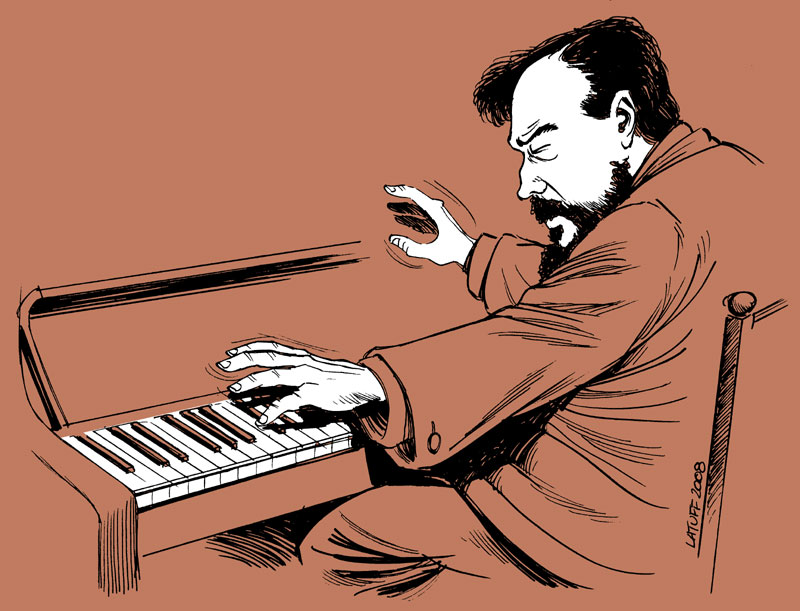
,Buenas tardes. Dejando de lado el excelso calor de mi Tucumán (no querido) quiero compartir una pieza sencilla y, podríamos decir, poética. Cuando la escuchen comprenderán. La interpretación es llevada a cabo por David Delucia. Sin más vueltas...ante ustedesRêverie:
Claude Debussy compuso este solo para piano en 1890.
Buenas tardes/noches. En este lluvioso día quiero compartir una suite de enorme calidad y melodía como es la Suite Bergamasque del francés Claude Debussy. Está compuesta por cuatro movimientos siendo el más característico (y famoso) el tercero, mejor conocido como "Claro de luna". Esta interpretación corre a cargo de una magnífica pianista rusa, la señoritaLiubov Gromoglasova.
Lamentablemente no puedo insertar los videos como de costumbre debido a que fueron desactivados por Youtube. No obstante, les dejo los link a cada movimiento así no se lo pierdan.
Primer movimiento: Prélude http://www.youtube.com/watch?v=6qVsg9fyz8g The first piece in the suite is entitled Prélude. It is a festive piece, which holds much of the baroque style that is commonly found in preludes, however it is more complete than most preludes. This is also the beginning and the end.
Segundo movimiento: Menuet http://www.youtube.com/watch?v=h5UE87kK2BE The second part of the Suite Bergamasque is the Menuet. This piece is particularly original, as it does not conform to the particular style that most minuets share. Rather than being very airy and dainty, this piece shows much more raw comedy.
Tercer movimiento: Clair de lune http://www.youtube.com/watch?v=2-vyPI8kpIk The third movement of Suite bergamasque is its most famous; titled "Clair de lune", meaning moonlight. It was written with Paul Verlaine's poem of the same name in mind. It is mostly played pianissimo and is in D-flat major.
Cuarto movimiento: Passepied http://www.youtube.com/watch?v=Ek0Gd6zfP38 The fourth and final movement of Suite Bergamasque is Passepied. A passepied is a type of dance which originated in Brittany, and means "pass foot". Debussy's Passepied is a happy, yet strangely mediaeval piece which is surprisingly faster than its Baroque counterparts. Throughout most of its duration, the piece is played with staccato arpeggios in the left hand.